Moisture Mapping: How Professionals Find Water You Can't See
When you experience water damage in your Colorado Springs home, the obvious flood or leak is only half the battle. After the visible water is extracted, the hidden moisture that has soaked into walls, floors, and structural elements is the true danger. If this moisture is not completely removed and dried, it leads to expensive secondary damage, including structural rot and, most commonly, mold growth within 24 to 48 hours.
So, how do professional restoration companies like Colorado Water and Mold Restoration know where the water is hiding? The answer is a precise process called Moisture Mapping.
Moisture mapping is the cornerstone of effective water damage restoration, moving the process from guesswork to scientific precision.
What Exactly is Moisture Mapping?
Moisture mapping is the systematic process of using specialized meters and thermal imaging to locate, measure, and record the level of moisture saturation within building materials. This is not just about finding wet spots; it’s about establishing the perimeter of the damage and verifying when a material has been dried back down to its normal, pre-loss condition.
It is a four-step diagnostic process that guides the entire drying plan.
1. Thermal Imaging: The Initial Scan
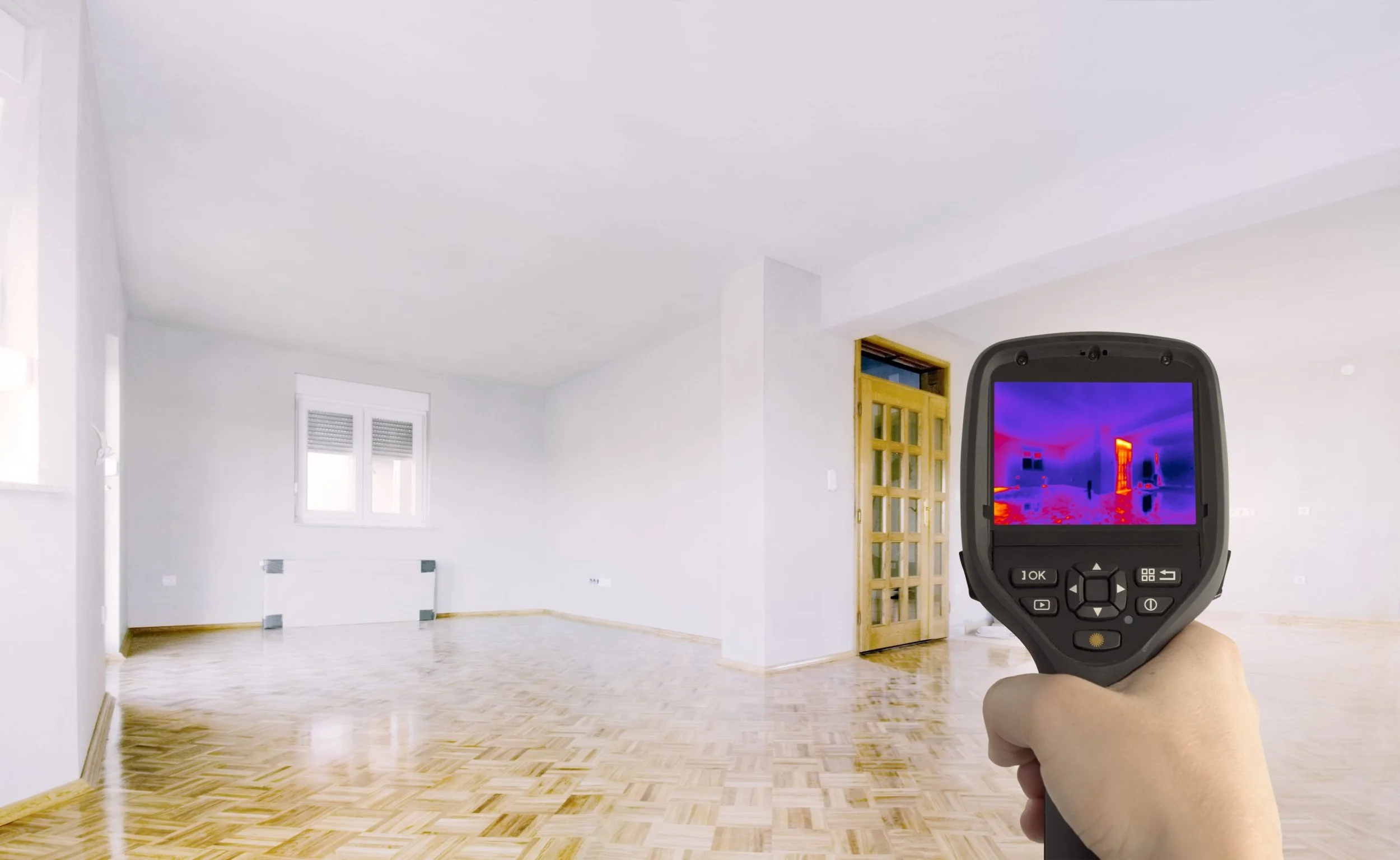
The first tool a professional technician uses is a thermal imaging camera (or infrared camera).
How it Works: Evaporating moisture draws heat away from a surface. When a material is wet, it is typically cooler than the surrounding dry material. The thermal camera detects these temperature differences and renders them as different colors on a screen.
The Benefit: This initial scan allows the technician to quickly visualize the extent of the damage without having to tear open walls. It helps define the initial "wet perimeter" and identifies potential sources of a leak.
2. Moisture Meters: Taking Precise Measurements
Once thermal imaging highlights suspicious, cool areas, technicians use specialized handheld moisture meters to get precise, quantitative data. There are two main types:
Pin-Type (or Invasive) Meters: These use two small pins pushed directly into a material (like wood or drywall) to measure the electrical resistance between the pins. Water conducts electricity, so a lower resistance indicates a higher moisture content. This provides a very accurate reading of the material's internal saturation.
Pinless (or Non-Invasive) Meters: These meters are placed on the surface of the material and use radio waves to scan for moisture up to a few inches deep without penetrating the surface. These are ideal for checking finished floors or painted walls without causing damage.
3. Establishing the "Dry Standard"
Before any drying equipment is deployed, the technician must find the "Dry Standard"—the normal, baseline moisture content of the undamaged material in an unaffected area of the property.
For example, if dry drywall in your hallway reads 6% moisture content, then the wet drywall in your basement must be dried back down to 6% (or less) before the job is considered complete.
The dry standard provides the definitive goal, ensuring that drying is not stopped prematurely, which would invite mold.
4. Documentation and Mapping
The "mapping" part of the process involves recording all these data points on a diagram of the affected area.
Technicians draw a floor plan, mark the location of the moisture readings, and note the percentage and type of material (e.g., "Drywall: 32%").
This map is updated daily throughout the drying process. It helps determine where to place high-velocity air movers and industrial dehumidifiers for maximum efficiency. It also serves as essential documentation for your insurance claim, visually proving the extent of the damage and the effectiveness of the restoration process.
Why Moisture Mapping Matters to You
Moisture mapping isn't just a technical step; it's your assurance of a job done right.
Without it, a restoration company might remove only the visible water, leaving hidden saturation to cause:
Mold and Mildew
Warped Hardwood Floors
Buckled Drywall and Peeling Paint
Structural Damage to Framing
By using moisture mapping, Colorado Water and Mold Restoration eliminates the guesswork, ensures your home is dried completely to its pre-loss condition, and provides the documentation needed for peace of mind.
If you suspect hidden water damage in your home, don't wait for mold to appear. Contact Colorado Water and Mold Restoration today for a professional moisture assessment.